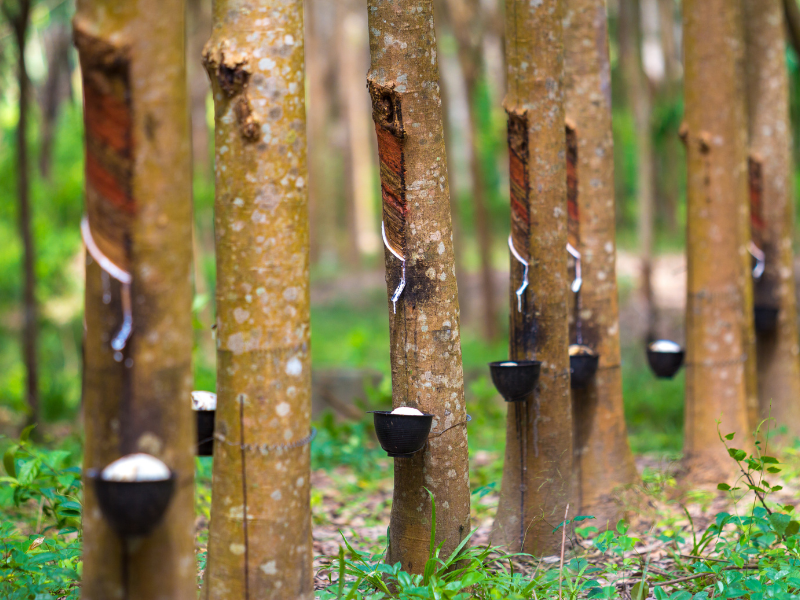
Raw materials for rubber includes natural rubber derived from nature, and synthetic rubbers derived from petrochemical feedstocks. Natural raw materials are produced from milky latex of rubber trees and they are highly elastic, while synthetic rubber raw materials are produced from petroleum and natural gas and they are widely used in almost every industry. Apart from natural and synthetic rubber raw materials, there are additives and chemicals as well. Sulfur, carbon black, phenol-based antioxidants and antiozonants are among the main types of rubber raw materials. You can see all these products and meet the rubber manufacturers in Rubber Eurasia 2026 at Tüyap Fair and Congress Center on 15-18 April and broaden your professional network. Do not forget to see our online ticket options to secure your place in advance!
Rubber Raw Materials and Testing Equipment at Rubber Eurasia 2026
Here are the most common raw materials for rubber industry showcased at Rubber Eurasia. Also, here is the 2026 Product List!
Rubber Control and Testing Devices
- Rubber Sheet Thickness Measurement Systems: These systems are used to measure the thickness of rubber sheets during production.
- Gibitre: Gibitre devices are used to test the physical properties of rubber materials.
- UTP Vision: UTP Vision systems use advanced imaging technology to inspect rubber surfaces.
- MicroVu: MicroVu devices are precision measurement systems used for dimensional inspection.
- Shoremeter: A shoremeter is used to measure the hardness of rubber materials.
- IRHD: IRHD stands for International Rubber Hardness Degree. These devices measure the hardness of rubber samples with high accuracy.
- Barotation: Barotation testing devices are used to analyze how rubber behaves under pressure and rotational forces during production.
- Rebound Resilience Tester: This device measures how well rubber returns to its original shape after deformation.
Natural Rubbers and Latexes
- Resins: Resins are used to improve the adhesion and mechanical strength of rubber compounds.
- Blowing Agents: Blowing agents are added to create foam structures within rubber materials.
- Antioxidants: Antioxidants protect rubber materials from degradation caused by oxygen and heat.
- Antiozonants: These additives protect rubber from damage caused by ozone exposure.
- Rubber Process Additives: Process additives improve the workability of rubber during manufacturing.
- Batch Off Soaps: Batch off soaps are used to prevent rubber sheets from sticking together after production.
- Pigments: Pigments are used to add color to rubber materials.
Synthetic Rubbers and Latexes
- SBR Latex: SBR latex is a synthetic rubber material commonly used in coatings, adhesives and textile applications.
- Silicone Rubber: Silicone rubber is known for its excellent resistance to heat and environmental conditions.
- Caprolactam Blocked MDI: This material is used in advanced rubber and polymer systems to improve chemical resistance and mechanical performance.
- FFKM: FFKM is a high-performance fluorocarbon rubber known for its extreme resistance to chemicals and high temperatures.
- VP Latex: VP latex is a synthetic polymer latex used in specialized rubber and coating applications requiring improved performance.
- HNBR: Hydrogenated nitrile rubber (HNBR) is widely used in automotive and industrial applications because of its strong resistance to oil, heat and chemicals.
Apart from raw material for natural rubber and synthetic rubber, you can also read our Rubber Manufacturing: Processing and Machinery"article to know more about the topic.