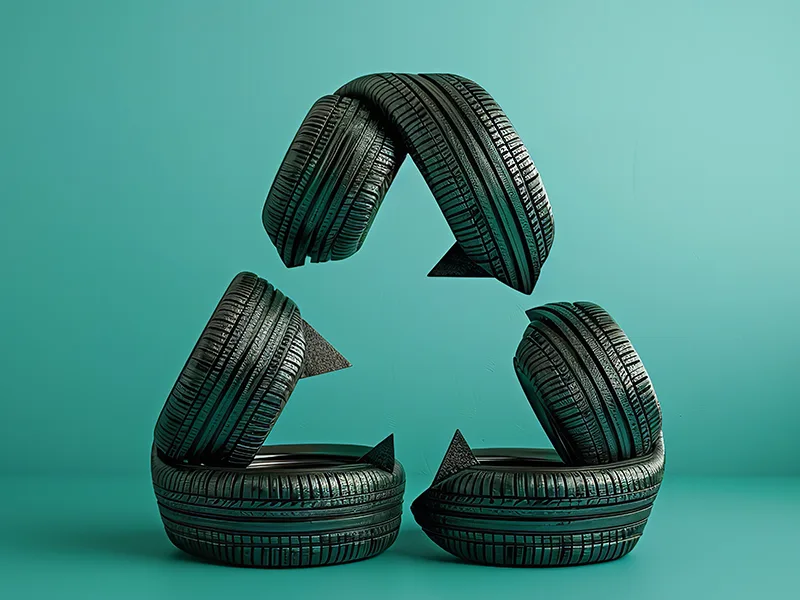
Rubber Recycling and Sustainability Practices
Today, environmentally friendly production and consumption are of great importance in every industry, including the rubber industry. Rubber, a widely used and long-lasting material, can pose environmental threats when it becomes waste. Therefore, rubber recycling plays a critical role both economically and ecologically.
Sources of Rubber Waste
Rubber waste generally comes from the following areas:
- Used tires
- Old rubber-based products
- Scrap generated during the production process
- Rubber-based automotive and industrial products
Recycling Methods
1. Mechanical Recycling (Granulation)
Used rubber is shredded into granules. These granules are mainly used in road surfaces, flooring, sports fields, and insulation materials.
2. Thermal Recycling (Pyrolysis)
Rubber waste is broken down in an oxygen-free environment at high temperatures. This process produces by-products such as oil, gas, and carbon black.
3. Chemical Recycling
Rubber is decomposed using solvents without breaking its molecular structure. This method requires advanced technology and is used in some specialized productions.
Sustainability Practices
- Green Production: Rubber manufacturers are adopting energy-efficient technologies to reduce natural resource consumption and minimize waste generated during production.
- Bio-based Rubber: Rubbers derived from plant-based raw materials contribute to sustainability by reducing fossil fuel use.
- Use of Recycled Products: The use of recycled rubber is becoming more common in construction, transportation, and sports fields.
Practices in Türkiye and Worldwide
- In Türkiye, the Ministry of Environment, Urbanization, and Climate Change supports projects that encourage tire recycling.
- Worldwide, in regions like the EU countries, the USA, and Japan, a large portion of waste tires are recycled and used across various industries.
Conclusion
Rubber recycling is not only crucial for environmental protection but also plays a significant role in energy savings, raw material efficiency, and economic benefits. For all producers and consumers aiming to achieve sustainability goals, these practices are no longer optional—they have become a necessity.